who discover quantum physics?
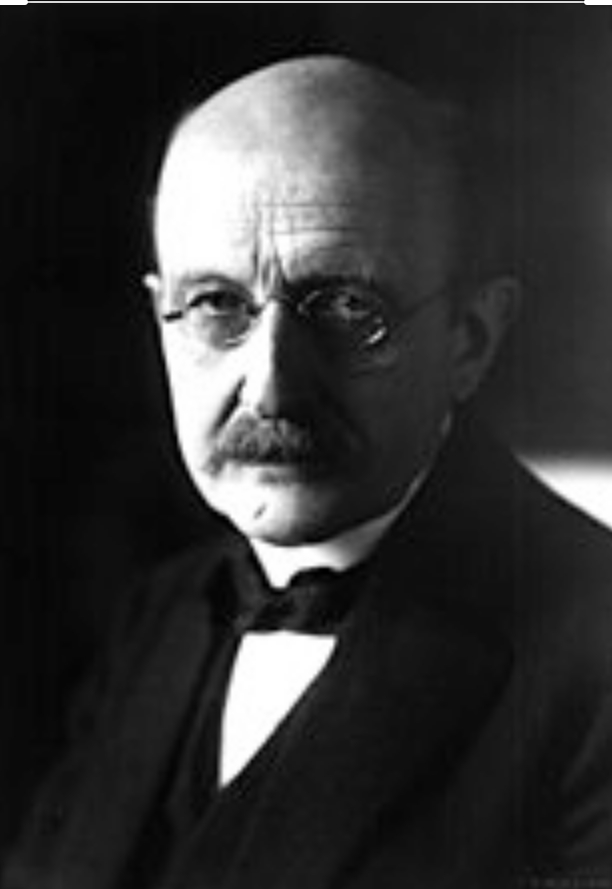
Neils Bohr and Max Planck, two of the founding fathers of Quantum Theory, each received a Nobel Prize in Physics for their work on quanta. Einstein is considered the third founder of Quantum Theory because he described light as quanta in his theory of the Photoelectric Effect, for which he won the 1921 Nobel Prize.
Introduction
Quantum mechanics is a fundamental theory in physics that provides a description of the physical properties of nature at the scale of atoms and subatomic particles . It is the foundation of all quantum physics including quantum chemistry, quantum field theory, quantum technology, and quantum information science.
Classical physics , the description of physics that existed before the theory of relativity and quantum mechanics, describes many aspects of nature at an ordinary (macroscopic) scale, while quantum mechanics explains the aspects of nature at small (atomic and subatomic) scales, for which classical mechanics is insufficient. Most theories in classical physics can be derived from quantum mechanics as an approximation valid at large (macroscopic) scale.
Quantum mechanics differs from classical physics in that energy, momentum, angular momentum, and other quantities of a bound system are restricted to discreet value (quantizarion), objects have characteristics of both partical and waves (wave- partical duality), and there are limits to how accurately the value of a physical quantity can be predicted prior to its measurement, given a complete set of initial conditions (the uncertainty principle).
At this point I think you should also exited to know more about it so I am giving the link of best book which you can take for free .
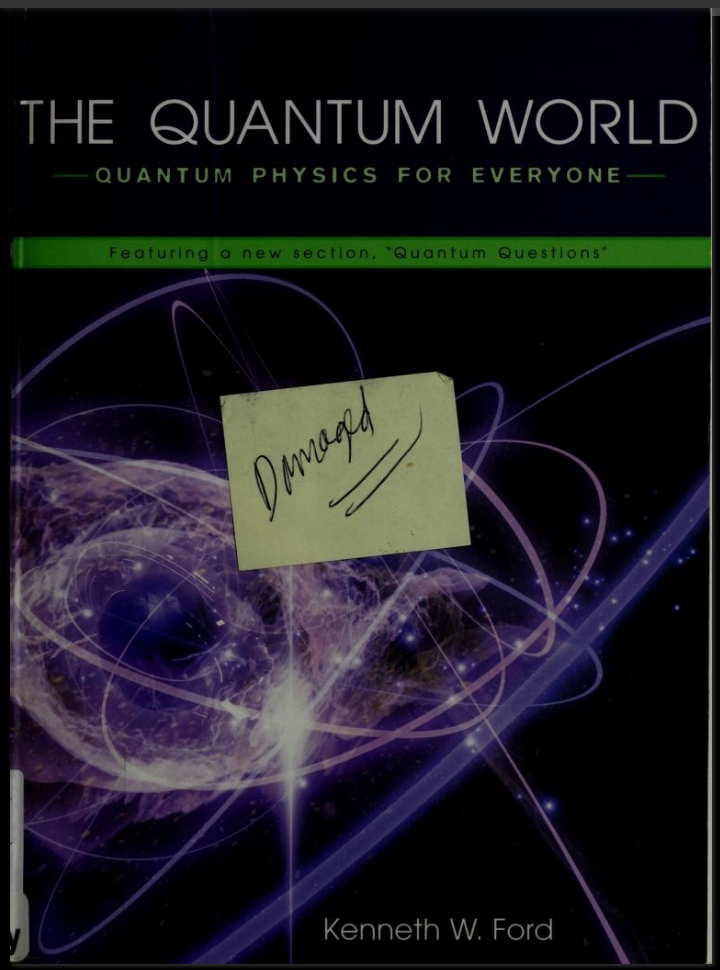
For this book some step you need to follow.
1. Install Adobe digital editions from play store.
2. Click this button.
3. Register and download pdf then click the URL , the book will download.
 Physics